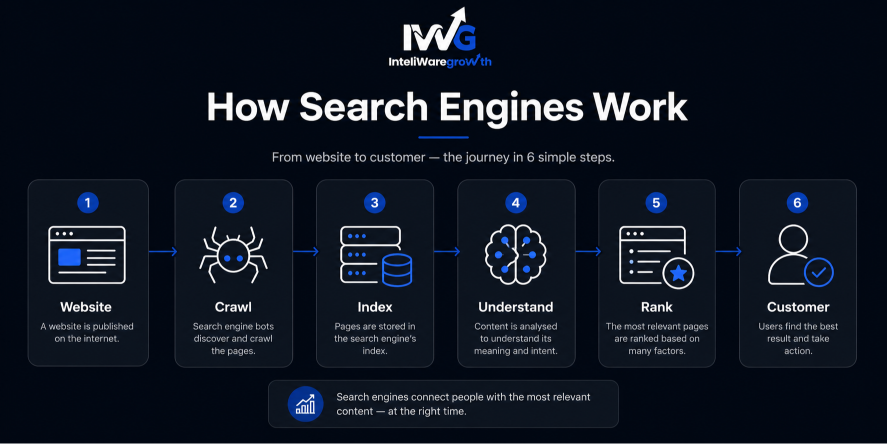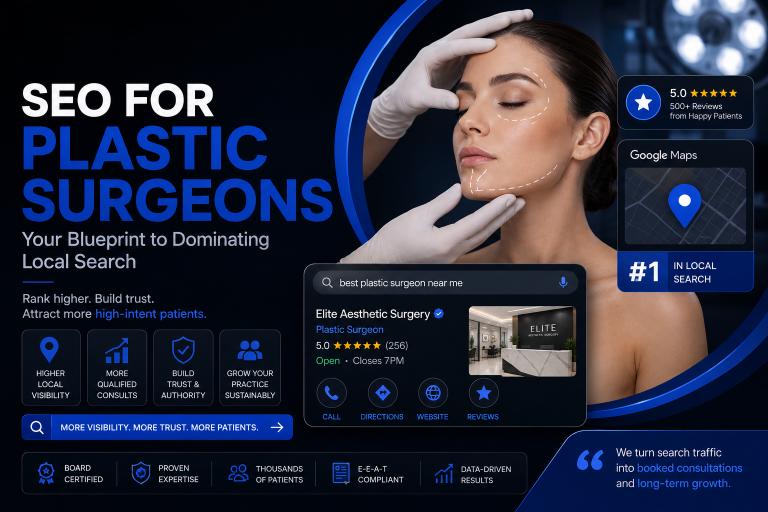
SEO for plastic surgeons is a specialized digital marketing strategy to optimize a clinic's online presence, drive organic local map visibility, and attract high-intent patients seeking specific cosmetic procedures like rhinoplasty or breast augmentation. Ranking on Google’s first page demands a surgical blend of technical precision, medical authority, and local trust signals. At Inteliware Growth, we convert search traffic into booked consultations through rigorous data analysis, conversion rate optimization, and deep respect for medical E-E-A-T.
This guide walks through the exact roadmap we use to scale practices—from dominating the Google Map Pack to building ethical backlinks that move the needle. The ASPS SEO guide ranks at the top by combining extreme domain authority with a logically chunked structure that answers every aspect of the query. We’ll apply that same pedagogical clarity, but inject the performance marketing lens of an agency that generates leads daily.
Why SEO is non-negotiable for plastic surgeons right now
A 35-year-old professional considering a mommy makeover doesn’t flip through directories. She searches “best tummy tuck surgeon near me” on her phone at 10 PM. If your clinic doesn’t appear in the local 3-pack or top organic results, you don’t exist to that high-intent prospect. Paid ads bridge the immediate gap, but the compounding trust of organic visibility converts skeptical researchers into loyal patients. A Google-commissioned study found that 77% of patients use online search before booking a healthcare appointment. Your specialization needs a tailored visibility strategy.
Core local & map optimization: be the obvious choice in your area
Local visibility begins with a flawless foundation. These core elements ensure Google trusts your practice’s location data and patient sentiment, directly influencing map pack rankings.
Google Business Profile: your non-negotiable front door
Your Google Business Profile is the most powerful local ranking signal. Claim, verify, and complete every field with surgical precision: exact clinic hours (updated for holidays), consistent address (matching your website and every directory exactly), and the primary category “Plastic Surgeon.” Add authentic attributes like “Women-led” or “LGBTQ+ friendly” to influence click-through rates.
Map rankings are fueled by review velocity
The local map pack filters by relevance, distance, and prominence. Reviews generate prominence. Systematize the ask: send an SMS with a direct review link 48 hours after the final stitch removal. Detailed reviews describing the procedure and recovery provide keyword-rich content Google can crawl. Respond with procedure-specific replies (“We’re thrilled your rhinoplasty recovery went so smoothly”) to reinforce local relevance naturally.
Citation consistency across medical directories
Inconsistent name, address, and phone number (NAP) data fragments authority. Ensure identical listings on high-authority medical platforms:
- Healthgrades
- RealSelf (crucial for aesthetics)
- Vitals
- RateMDs
- WebMD Care
We run quarterly citation audits because even “St.” versus “Street” can dilute your local power.
Procedure-specific content & on-page SEO: meet the patient where it hurts
A single “Services” page listing 20 procedures will never rank for “rhinoplasty surgeon Manchester.” The search intent is too specific. Google wants a page that entirely answers that procedural query.
Dedicated pages for every distinct service
Build separate, comprehensive web pages for each service line as authoritative hubs.
- Liposuction: Cover techniques (tumescent, VASER), candidate criteria, recovery, and cost ranges.
- Facelift: Differentiate mini, full, and deep plane lifts.
- Rhinoplasty: Address primary vs. revision, and ethnic rhinoplasty if it’s your expertise.
Deep topical coverage signals that you are the subject matter expert.
E-E-A-T compliance: show, don’t just tell
Google’s “Experience, Expertise, Authoritativeness, and Trustworthiness” guidelines are heightened for medical queries. Your site must radiate legitimacy.
- Board certifications (American Board of Plastic Surgery, FRCS Plast) displayed above the fold.
- Professional memberships (BAAPS, ASPS, ISAPS) functioning as trust badges and linking to your profile on their sites—a powerful backlink.
- Surgeon bios written in first-person authority: “Dr. [Name] has performed over 1,000 breast augmentations and is a key opinion leader on minimal-scar techniques.”
- Cite peer-reviewed studies when discussing risk profiles. This is an E-E-A-T booster.
Image optimization for the visual nature of aesthetics
Before-and-after galleries are your strongest conversion tool but are often SEO black holes. Use descriptive alt tags: “Breast augmentation before and after 6 months post-op profile view.” This helps Google Images surface your gallery. Ensure consent compliance, warn if graphics are visible, and compress images for mobile speed without losing clinical detail.
Technical & authority building: the backend that makes rankings stick
On the technical side, speed, structured data, and clean architecture separate top-ranking sites from the rest. These backend elements ensure search engines can effortlessly crawl and understand your practice’s authority.
Mobile speed is a patient experience metric
A facelift patient comparing three clinic websites on her iPhone will bounce if your site takes over three seconds. Google measures this via Core Web Vitals. Use next-gen formats (WebP) and minimize third-party scripts. A fast, clean design signals a professional, safe practice; a sluggish site feels outdated.
Medical schema markup: speak Google’s language
Structured data feeds search engines precise information. Implement:
- Physician schema: Name, specialization, medical school, board certification.
- Medical Procedure schema: Mark up each procedure page with preparation, type, and recovery time.
- Local Business schema: Tie everything back to your physical address.
Correct markup can earn rich snippets and inclusion in Google AI Overviews.
Ethical link building that doctors can be proud of
Buying links risks penalties. Build authority through:
- Accredited medical board directory profiles.
- Local chamber of commerce memberships (.gov/.org links).
- Speaking engagements at conferences (institutional event pages link back).
- Guest education on trusted health portals, linking naturally to your bio.
This aligns with Inteliware Growth ethical tenet, focusing on relevance over spam.
Inteliware Growth’s approach: beyond SEO to full-funnel patient acquisition
Ranking is meaningless if it doesn’t fill your consultation calendar. Our 5-step framework turns organic traffic into revenue.
- Audit: We analyze competitor keywords, GBP dominance, content gaps, and every broken citation.
- Strategy: We build a roadmap forecasting leads per procedure based on search volume, conversion rate, and procedure value – a true ROI forecast.
- Execution: From custom landing pages that blend paid ad speed with SEO depth to procedure hubs satisfying E-E-A-T, we launch assets built to convert.
- Tracking: Our real-time dashboards attribute booked consultations to specific keywords and landing pages via call tracking and HIPAA-compliant form analytics. Every penny is accounted for.
- Scale: Once a keyword like “rhinoplasty specialist London” proves profitable, we expand to surrounding neighborhoods and related terms like “septorhinoplasty.” Budget scales on data, not hunches.
Our work integrates SEO with the performance channels we manage. SEO builds the trust layer that makes Google Ads and paid social far more efficient. When a patient clicks your ad, then searches your brand to see a full first page of positive reviews, detailed galleries, and medical authority, resistance plummets.
Converting traffic into patients: the role of CRO in medical SEO
Driving traffic without conversion optimization is a leaky bucket. Every page must guide the user.
- Prominent “Book Free Consultation” buttons: In the header, after the first paragraph, and sticky on mobile.
- Trust signals near the CTA: “No obligation. Confidential. Response within 4 hours.”
- Phone number click-to-call: +92 344 3503901 or your local number must be a tap-to-call link on every mobile page.
For a deeper conversion funnel audit, View Our Services tailored to Doctors & Clinics. We’ve seen practices increase consultation rates by 30% simply by repositioning contact touchpoints.
Frequently Asked Questions
How long does it take to see results from medical SEO?
Local map pack movement typically takes 3-4 months; competitive procedure terms can take 6-12 months. Google builds trust in medical domains slowly. Technical fixes and GBP optimization yield faster wins.
What’s more important for a plastic surgeon: paid ads or SEO?
They work symbiotically. Paid ads provide immediate leads while SEO matures. A strong organic presence lowers overall cost per acquisition because patients trust organic listings more and convert at higher rates. We recommend a blended strategy.
Do I need separate pages for each procedure?
Absolutely. Google sees “liposuction” and “tummy tuck” as distinct entities. A thin “Body Procedures” page won’t rank for either. Individual, deep pages also let you target long-tail variations.
How important are before-and-after photos for SEO?
Extremely. They improve dwell time, rank in Google Images, and earn backlinks when shared safely. Always use descriptive file names and alt text.
Can negative reviews hurt my SEO?
A perfect 5.0 rating is less important than high review velocity and professional responses. Google looks at recency and engagement. Actively managing your reputation signals a live, engaged business.
What’s the biggest SEO mistake plastic surgeons make?
Ignoring citation consistency or having duplicate GBP listings. Also, publishing thin content without medical authority citation. Both can trigger Google’s medical content quality flags.
Build an unshakeable digital reputation
The future of plastic surgery marketing isn’t chasing the next social trend. It’s building an unshakeable digital foundation where search engines and patients view your practice as the authoritative, most human-centric option. This requires meticulous attention to local signals, procedure-page depth, and technical schema.
At Inteliware Growth, we craft patient acquisition systems. Our track record spans taxi companies, immigration law firms, app startups, cleaning companies, and deep specialisation in Doctors & Clinics. Every industry receives a bespoke growth framework, never a cookie-cutter strategy. To see the real numbers behind our campaigns and the ROI we consistently deliver, explore our Case studies.
Our blog dives deeper into the strategies that make these results possible – visit the Blog for actionable insights.
And if you'd like to learn more about our team and how we approach growth, the About page has the full story. If you’re ready to turn search traffic into a predictable stream of surgical consultations, let’s connect.
Contact Us
📞 +92 344 3503901
📧 sales@inteliwaregrowth.com
📍 London, United Kingdom
Book Your Free Consultation