What is Link Building?
You’ve likely heard that link building is one of the most important pillars of search engine optimization. But if you’re running a high-intent service business — a taxi company competing for local rides, an immigration law firm chasing compliant leads, or a clinic trying to fill appointment slots — you might wonder: “What is link building actually going to do for my bottom line?”
The short answer: a lot more than you think, but only if it’s done right.
At Inteliware Growth, we’ve spent over a decade building growth frameworks for niche service industries. While we’re a performance marketing agency laser-focused on paid advertising and conversion rate optimization, we understand that a smart link building strategy doesn’t just boost your SEO — it feeds your entire funnel with qualified traffic that your paid campaigns can retarget, convert, and scale. And that’s the secret most generic guides won’t tell you.
In this post, I’m going to break down exactly what link building is, why it still matters in 2026, how to do it without getting penalised, and — crucially — how to turn those hard-earned backlinks into real revenue. Let’s dive in.
What Exactly Is Link Building?
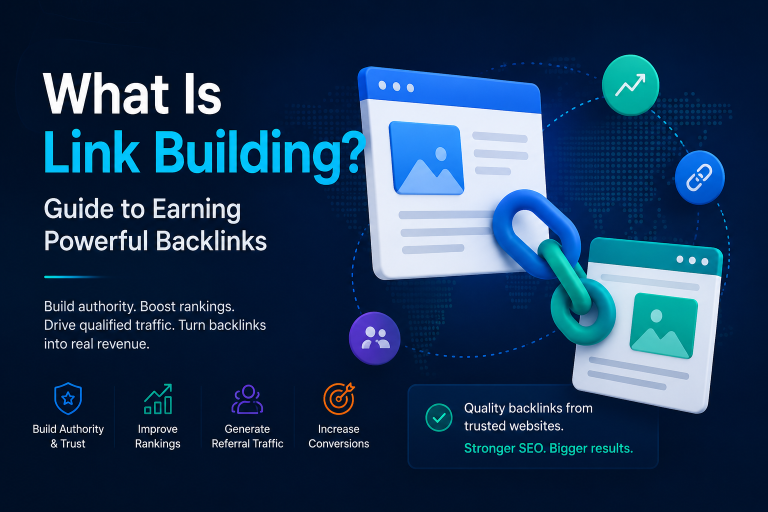
Link building is the process of acquiring hyperlinks from other external websites that point to pages on your own site. In the world of SEO, these inbound links are called backlinks. Search engines like Google treat them as votes of confidence. When one website links to another, it’s effectively vouching for the quality, relevance, and trustworthiness of that content.
Think of it as a digital word-of-mouth referral. The more credible the referring source, the stronger the signal sent to Google’s algorithm. This concept is rooted in Google’s original PageRank patent, and despite countless updates, backlinks remain one of the top three ranking factors today.
But link building isn’t just about search engines. A well-placed link on an industry-leading publication or a hyper-local news site can send direct referral traffic to your landing pages — traffic that’s already pre-warmed and highly relevant. For service businesses, that’s gold.
Why Link Building Matters for SEO (and Your Business)
A 2024 study by Backlinko once again confirmed a strong correlation between the number of referring domains and higher rankings. Here’s why links still power the open web:
- Authority & Trust: Google’s E-E-A-T guidelines (Experience, Expertise, Authoritativeness, Trustworthiness) heavily lean on who links to you. A link from a respected law association or a local chamber of commerce tells Google you’re legitimate.
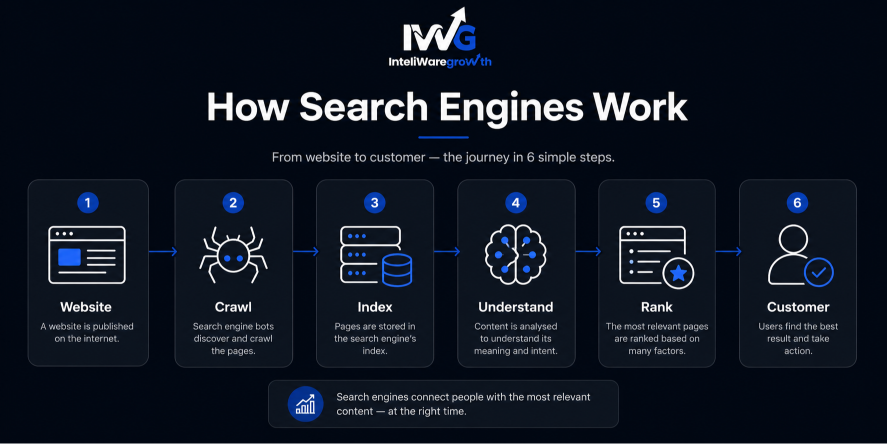
- Indexing & Crawling: Search engine bots discover new content by following links. Quality backlinks help your service pages get indexed faster.
- Referral Traffic: This is the often-overlooked superpower. A guest post on a blog read by startup founders can send a steady trickle of potential app developers straight to your website — traffic you’d otherwise pay for.
- Competitive Edge: In local niches like “cleaning company London” or “immigration solicitor Manchester,” a handful of authoritative local links can be the difference between page one and page two.
But here’s the nuance: a link alone doesn’t pay the bills. At Inteliware Growth, we always tell our clients that traffic without conversion is just a vanity metric. The real magic happens when you combine link building with a conversion-optimised landing page and a data-driven retargeting strategy. That’s why our 5-step growth framework covers everything from audit to scale.
Types of Links That Move the Needle
Not all links are created equal. Understanding the landscape is the first step to building a healthy backlink profile.
1. Editorial or “Natural” Links These are the holy grail. A blogger or journalist finds your data-driven guide on “Immigration Law Changes in 2026” and links to it as a source, completely unprompted. You earn these by creating truly original value — something we’ll touch on later.
2. Manual Outreach Links You actively pitch your content to other site owners. This could be a broken link replacement, a resource page addition, or a simple “this might interest your readers” email. Done respectfully, it’s the backbone of most campaigns.
3. Guest Posting You write a high-quality article for a relevant publication in exchange for a contextual link back to your site. For a cleaning company, that might mean contributing cleaning tips to a local lifestyle blog.
4. Business Profile & Directory Links Crucial for local SEO. A consistent NAP (Name, Address, Phone) across quality directories like Google Business Profile, Yell, or niche directories for doctors and solicitors signals local relevance.
5. Digital PR Links Using newsworthy stories or data to earn coverage. An app startup releasing a unique study on user behavior can land links from major tech press.
The Difference Between Good and Bad Links
Google’s algorithms are sophisticated enough to ignore — or punish — spammy links. A good backlink:
- Comes from a relevant, trusted website in your niche or locality.
- Is editorially placed (i.e., the author chose to link to you because it adds value).
- Uses natural, varied anchor text, not exact-match keywords like “cheap taxi London” every time.
- Sends qualified traffic that bounces rarely and converts occasionally.
A bad backlink is typically paid for in bulk, sits on an irrelevant forum profile, or comes from a toxic “link farm.” If you’ve inherited a messy backlink profile, a disavow file might be necessary, but building great links is a far better use of energy than fixing bad ones.
How Link Building Complements Paid Advertising (The Inteliware Edge)
Most SEO experts talk about link building in a vacuum. As a performance marketing agency, we see it as the top-of-funnel force multiplier for your paid media.
Consider this scenario: You’re a taxi & private hire company. You earn a link from a local city guide’s article on “The Best Transport Options from the Airport.” That article drives warm referral traffic to your homepage. But not everyone books right away.
With a pixel in place, you can now retarget those visitors with a tailored Meta or Google Display ad offering a 10% discount on their first ride. You’ve used a free backlink to feed a high-converting paid funnel. The cost to acquire that customer just dropped dramatically.
For Immigration law firms, an authoritative link from a human rights blog might send deeply worried visitors. Your landing page, refined by our CRO audits, immediately answers their anxiety with clear calls to action and a “Book Free Consultation” button. The trust built by that referring link increases your landing page conversion rate significantly.
At Inteliware Growth, our 5-step framework — Audit, Strategy, Execution, Tracking, Scale — can be applied directly to the traffic you earn from link building. We audit your landing pages, build a custom retargeting strategy, execute compelling ad creatives, implement bulletproof tracking, and then scale what works based purely on data.
Link Building Strategies for Your Specific Niche
One size never fits all. Here’s how we approach link building for the industries we serve:
For Taxi & Private Hire Companies
- Local partnerships: Form relationships with hotels, airports, and event venues; ask for a link in their “Travel & Transport” section.
- City guides & blog: Offer a local’s perspective for “Best Ways to Get Around [City]” articles.
- Sponsorships: Sponsor a local charity run or football team, which naturally comes with a link.
- Internal resource: See how we help Taxi Companies turn local search intent into ride requests.
-
Guest posting on legal & expat sites: Write about complex visa processes, linking back to your service page.
-
Government & educational links: .gov and .ac.uk links are powerful. Offer a clear explainer that a university’s international student office might reference.
-
Awards & accreditations: Ensure your Law Society or OISC badges link back to your site.
Explore our framework for Immigration lawyers that ensures compliant lead generation.
For App-Based Startups
-
Product Hunt & tech directories: A launch link can generate buzz and early signals.
-
App review sites: Genuine reviews on sites like TechCrunch or niche app blog.
-
Data-driven PR: Publish original research on user behaviour that journalists will cite.
Discover how we drive profitable user acquisition for App Startups.
-
Community hubs: Links from local Facebook groups or Nextdoor-style aggregators where neighbours recommend you.
-
Before-and-after content: Visual guest posts on home improvement blog are highly linkable.
-
Trade organisations: Membership badges from bodies like the British Institute of Cleaning Science.
Ready to dominate local search? See our cleaning companies lead generation playbook.
-
Medical directories: High-authority listings on NHS partner sites or private healthcare registries.
-
Health blogging: A GP can answer common patient questions on a trusted wellness platform.
-
Local news: Offer expert commentary on seasonal health issues (flu shots, allergies) for a quick backlink.
Learn about our patient acquisition strategies for Doctors & Clinics.
A 6-Step Actionable Link Building Workflow (You Can Start Today)
If you don’t yet have a dedicated SEO team, here’s a process you can follow this week:
- Identify Linkable Assets: What do you have that others would want to reference? A unique pricing study, an interactive map of taxi wait times, a comprehensive immigration checklist.
- Find Prospects: Use a tool like Ahrefs or Semrush. Plug in a competitor’s URL and see who links to them. Those are your prospects.
- Qualify: Filter by Domain Rating (DR), traffic, and relevance. A DR 30 local blog with real readers is often better than a DR 80 generic site.
- Craft Your Outreach: Send short, personalised emails. “Hi [Name], I saw you shared a guide on moving to the UK. I’ve just published a free 2026 immigration timeline spreadsheet — might be a helpful addition to your page. Either way, keep up the great work.”
- Create a Reason to Link: Don’t just ask for a link; offer value. “If I wrote a 500-word section on how to vet a cleaning service for your ‘New Homeowners Guide,’ could we include a brief mention of our checklist?”
- Track & Retarget: Use UTM parameters on your backlinks. When you see traffic land, ensure your retargeting audiences capture them. That’s where Inteliware Growth steps in to scale your results.
Common Link Building Mistakes That Waste Your Budget
- Buying links. It’s a fast track to a manual penalty. The short-term gain isn’t worth the long-term business risk.
- Chasing the wrong metrics. A high Domain Authority (DA) score from a tool means nothing if the site has zero real traffic. Google doesn’t use DA.
- Irrelevant links. A link from a gaming blog to a law firm looks unnatural and provides zero traffic value.
- Neglecting internal links. Before chasing new backlinks, make sure your own site’s pages are properly interlinked with descriptive anchor text. It distributes link equity.
- Ignoring the user. If the landing page the link points to is slow, cluttered, or doesn’t deliver on the promise, you’ve wasted a golden opportunity.
The Link Building Landscape Is Evolving, Not Dying
Every few years, someone declares “link building is dead.” It’s not. It has simply evolved from a game of volume to a game of genuine quality and relevance. Google’s algorithm now understands context better than ever. A natural, well-placed link on a small, hyper-relevant site can be far more powerful than 100 generic directory submissions.
The future belongs to businesses that treat link building as digital relationship building. And the smartest businesses are the ones that don’t let that hard-earned traffic go cold — they build a conversion engine around it.
At Inteliware Growth, we’ve built that engine for taxi fleets, law firms, App Startups, cleaning companies, and medical clinics across the UK. We start with a forensic audit of your market, build a multi-channel strategy that doesn’t just get you clicks but customers, and track every single penny so you see a clear ROI. Dive deeper into our results on the Case Studies page.
Your backlinks bring the audience. We make sure they convert.
Frequently Asked Questions
Do backlinks still help rankings in 2026? Absolutely. Backlinks remain a core Google ranking signal. However, the emphasis is firmly on quality, relevance, and the overall trustworthiness of the linking site. A spammy link profile will do more harm than good.
How many backlinks do I need to rank? There is no magic number. A new taxi company might only need 15-20 strong local citations and a couple of high-quality local news links to dominate its city, while a national immigration firm will need a much broader profile. Focus on the authority of each link, not a quantity target.
Can I build links myself, or do I need to hire someone? You can start yourself by building genuine relationships and creating excellent content. However, outreach is time-consuming. If you hire, avoid anyone promising “100 permanent backlinks for £50.” Quality link building requires strategy and a human touch.
How does link building fit with paid ads? They are synergistic. Organic traffic from backlinks lowers your cost-per-acquisition when you retarget those visitors with paid ads. At Inteliware Growth, we build transparent dashboards that show you exactly how your organic traffic interacts with your paid campaigns, so you can scale profitably. Check out our full range of performance marketing services.
What is a “toxic” backlink? A toxic link comes from a site that exists solely to manipulate rankings, a spammy forum, an irrelevant foreign site, or an obvious link network. These can be flagged in Google Search Console. Building healthy links usually outweighs the impact of a few toxic ones, but a severe case may require a disavow file.
Ready to Build High-Quality Backlinks?
We help service businesses earn authoritative links that drive both rankings and revenue.
Contact Us
📞 Phone: +92 344 3503901
📧 Email: sales@inteliwaregrowth.com
📍 Location: London, United Kingdom