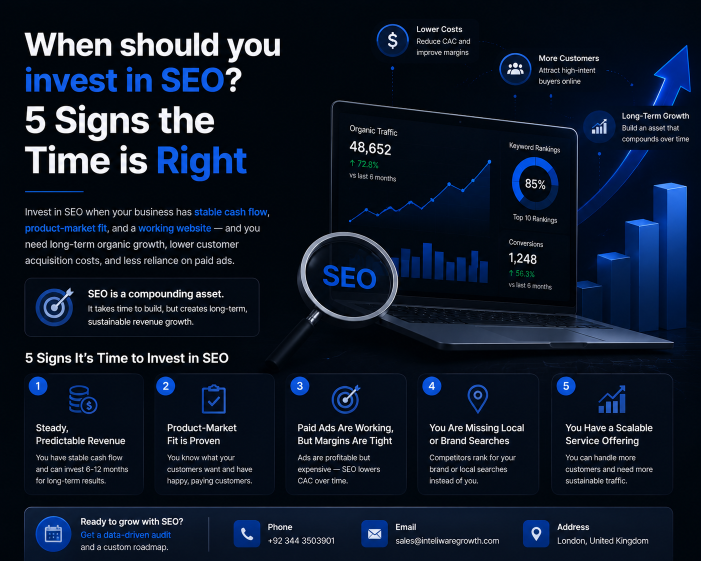
You should invest in SEO when your business has a stable cash flow, product-market fit, and a working website, but you need long-term organic growth, lower customer acquisition costs, and reduced reliance on paid ads.
If you have ever felt like you are renting your customers from Google Ads or Meta, you have probably wondered when to make the switch to organic search.
At Inteliware Growth, we specialize in performance marketing for high-intent industries, from taxi companies to immigration lawyers, and we constantly see the same dilemma. Business owners know they need SEO, but they aren't sure if now is the time.
The truth is, SEO is not a magic bullet. It is a compounding asset. But if you invest too early, you might run out of cash before the results arrive. If you invest too late, your competitors may build a moat that is too expensive to cross.
Here is how to know if the time is right for your business.
Signs it is time to invest in SEO
These indicators signal that your business has moved past the survival stage and is ready to build a long-term digital asset.
1. You have steady, predictable revenue
The first signal is financial stability. SEO is a long game. If you are living month-to-month on your revenue, you cannot afford to wait for organic rankings to mature.
You are ready if you can fund a marketing budget that takes 6 to 12 months to show major search momentum without needing instant daily sales to keep the lights on. This runway allows your content to age, gain authority, and climb the rankings without the pressure of immediate ROI killing the strategy.
2. Product-market fit is proven
Have you ever invested in marketing a product that people didn't actually want? It is a waste of money. You should only scale your organic footprint once you have validation.
You know you are ready when you already know what your buyers want and have a roster of happy customers. This allows you to write content that answers real questions. You aren't guessing at keyword intent; you are solving the problems your current customers already pay you to solve.
3. Paid ads are working, but margins are tight
This is a unique position. Many agencies will tell you to choose between SEO and PPC. We don't. At Inteliware Growth, we believe the best time to invest in SEO is when your paid ads are already performing well.
If your Google Ads are profitable but eating into your margins, you are ready to scale up growth and lower your overall marketing costs over time. SEO acts as a hedge against rising CPC costs. Once your organic listings rank, you stop paying for those specific clicks, improving your blended Customer Acquisition Cost (CAC).
4. You are missing local or brand searches
This is often the most urgent wake-up call. Try searching for your exact business name right now. What do you see?
If people look for your exact business name or local service, but competitors show up first, you are leaving money on the table. These are high-intent users. They are already sold on you or your service category. Losing these searches to competitors is dangerous. Investing in SEO ensures you own your brand narrative and capture local demand.
5. You have a scalable service offering
If your business can handle more customers without breaking, you need more traffic. Unlike paid ads that stop the moment you stop spending, SEO compounds.
If you have the operational capacity to handle 20% more clients, organic growth is the safest way to fill those slots. It builds a pipeline that doesn't fluctuate wildly with your ad budget.
When to wait on SEO
Just as important as knowing when to start is knowing when to hold off. Investing too early can drain a tight budget and sour you on organic marketing forever.
You just launched today
Brand-new startups often need cash flow this week, not in six months. If your business is brand new and you need instant validation or revenue, SEO might not be your first move.
Usually, a brand-new venture does better using paid ads or direct outreach first. This generates immediate revenue and, crucially, data. You can then use that data to inform a smarter SEO strategy later.
Your budget is too tight
There is no shame in waiting. SEO requires consistency. If you can only afford to write two blog posts and then stop for three months, the effort will stall out.
If you cannot sustain a multi-month commitment or afford proper execution, you are better off saving that money until you can do it right. A half-finished SEO campaign is worse than no campaign at all.
Your website is broken
You should not pay for traffic if your storefront is broken. This applies to both paid and organic traffic.
If your pages load slowly, break on mobile devices, or lack basic security (HTTPS), you must fix the site foundation before paying for traffic. View [our services](https://inteliwaregrowth.com/[services](https://inteliwaregrowth.com/services/)) to see how we can help. Google will not rank a site that offers a poor user experience. Sending traffic to a slow site is like pouring water into a leaking bucket.
Why timing matters: paid ads vs. SEO
Understanding the difference between paid and organic channels helps you allocate your budget.
Paid ads: This is the switch. You turn it on, you get traffic. You turn it off, the traffic stops. It is excellent for testing offers and generating instant cash flow.
SEO: This is the asset. It takes time to build but provides compound returns. Once you rank for a high-intent keyword, you get free clicks. The cost per acquisition drops dramatically over time.
The best digital strategy usually involves a hybrid approach. Use PPC to fuel the engine now, and SEO to buy the engine so you don't have to rent it forever.
What Reddit users and experts say
We aren't the only ones who see it this way. The broader marketing community often views SEO as a delayed but powerful tool.
Users on Reddit generally agree that SEO is a powerful long-term asset once a business can comfortably budget for ongoing optimization and measure results past the 6-month mark. The consensus is clear: if you need results tomorrow, stick to PPC. If you want results forever, invest in SEO.
If you are a DIY type, you can learn basic optimization steps via the Google Search Guide. However, for businesses in competitive niches like law or taxi services, professional execution is often required to see movement.
Is SEO worth it for your industry?
At Inteliware Growth, we see the impact of timing across our core niches. The question of when often depends on your market.
- For taxi companies: SEO is vital for local searches like taxi near me. If you don't rank here, you are losing direct bookings to aggregators.
- For immigration lawyers: The buying cycle is long. Clients research for weeks. SEO allows you to capture them at the research phase, building trust before they even call.
- For app startups: While App Store Optimization (ASO) is key, web SEO helps capture how-to searches that build a user base outside the app store.
- For doctors & clinics: Patients search for symptoms. Medical SEO helps you appear in those moments of need, guiding them to book an appointment.
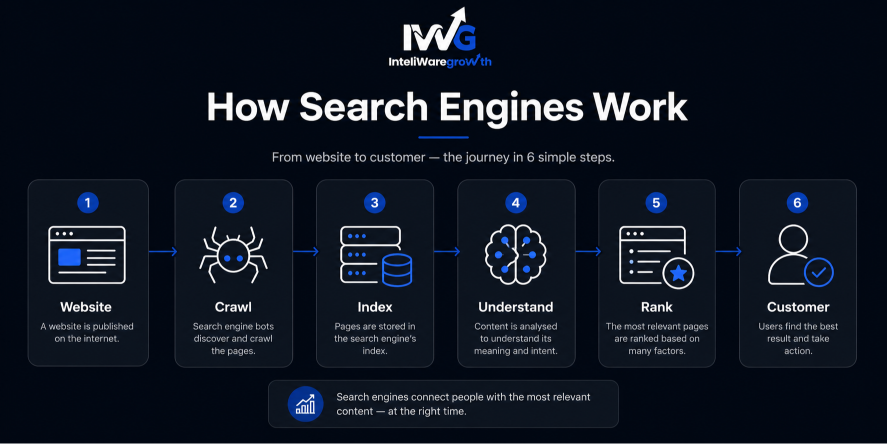
To understand how search engines evaluate your site, review Google's official guide on How Search Works.
Conclusion: is now the right time?
Investing in SEO is a decision about the future of your business. If you are tired of watching your ad costs rise while your profit margins shrink, it might be time to build your own digital assets.
You should invest now if:
- You have steady revenue and a 6-12 month runway.
- You have proven product-market fit.
- You want to stop renting your traffic from Google Ads.
You should wait if:
- You need instant cash flow to survive.
- Your budget is too small to commit to consistency.
- Your website isn't ready to convert visitors.
If you fall into the Ready category, the next step is a strategic audit. Don't just write random blog posts; you need a roadmap.
Ready to find out if your business is ready for SEO?
Contact Inteliware Growth today for a data-driven audit of your current digital footprint.
Contact Us
📞 +92 344 3503901
📧 sales@inteliwaregrowth.com
📍 London, United Kingdom
FAQs
How long does SEO take to work?
Typically 6 to 12 months for significant momentum, depending on competition and website authority.
Is SEO better than paid advertising?
They serve different purposes. Paid ads give instant results; SEO builds long-term, lower-cost organic growth. A hybrid approach is usually best.
Can I do SEO myself?
Yes, you can learn basics via Google's guides, but technical SEO and competitive content often need professional help.
What is the first step in investing in SEO?
Start with a technical audit and a content gap analysis to see what's broken and what competitors rank for.
How much does SEO cost?
Costs vary widely. For competitive niches, expect a monthly retainer comparable to a solid PPC budget or a full-time employee.